Introduction
In a world where the ways in which public opinion is formed are changing rapidly due to geopolitical transformations, the proliferation of digital platforms, and the rise of artificial intelligence applications, direct field experience has become essential for every institution or researcher seeking to understand the latest methods for measuring and interpreting public attitudes. Field programs provide an opportunity to move beyond theoretical knowledge and observe research, training, and practical environments firsthand, while engaging directly with institutions, researchers, and survey practitioners in diverse international contexts.
Against this backdrop, the World of Opinions Center is offering a specialized field program in Mexico City that combines participation in the 79th Annual Conference of the World Association for Public Opinion Research (WAPOR) with selected academic and research visits to leading Mexican institutions in the fields of social sciences, political communication, quantitative and qualitative methodologies, and public opinion research.
The program is particularly significant because the conference will be held under the theme “Public Opinion Research in an Emerging Multipolar World Order.” This theme opens a direct discussion on measurement quality, cross-cultural and multilingual comparability, legal and political pressures on polling, and the impact of digital media, artificial intelligence, and new forms of data on the collection, analysis, and interpretation of public opinion.
Added Value of the Program
- Benefit from a major international conference specializing in public opinion and survey research.
- Gain firsthand exposure to leading Mexican institutions in the social sciences and public policy.
- Establish channels for networking and research cooperation with institutions in Mexico and Latin America.
- Integrate contemporary methodological knowledge with an understanding of Mexico’s political, social, and cultural context.
Why Mexico?
- A long-established tradition in public opinion research: Mexico has a substantial history of public opinion research and polling dating back to the first half of the twentieth century. A scientific institute for public opinion was established there in 1941, after which survey research developed further during the 1960s and 1970s and gained increasing importance during the 1980s and 1990s alongside the country’s democratic and political transformations. Mexico therefore represents not a new or emerging experience, but rather an accumulated body of expertise extending over several decades.
- The development of the polling industry and its relationship with democratic transformation: Public opinion polls have played an important role in Mexican political life and democratic transformation. They have helped measure voters’ attitudes and citizens’ views toward candidates, public issues, and institutions, while also providing researchers with longitudinal data that make it possible to study changes in Mexicans’ social, political, and economic attitudes over time.
- Advanced expertise in election polling: Elections constitute one of the areas in which Mexican polling expertise has developed most significantly. This includes pre-election surveys, measurement of voting intentions, exit polls, and the study of electoral attitudes. The extensive use of these tools has produced considerable experience in designing, implementing, and evaluating election surveys.
- An institutional and legal framework regulating public opinion polls: Mexico has developed an advanced framework for regulating election polling. Formal regulation began in 1993, with standards subsequently evolving in 1996 and 2008, before responsibilities were transferred to the current legal framework following electoral reforms. The National Electoral Institute (INE) oversees the publication of election polls under regulations emphasizing transparency and public access to methodological information.
- A strong emphasis on transparency and methodological quality: Mexican requirements are not limited to publishing survey results. They also require disclosure of key methodological elements, including sample size, confidence level, margin of error, fieldwork dates, question wording, and methods used to address non-response. In some cases, the database associated with published results must also be made available. This makes the Mexican experience particularly valuable for examining the relationship between survey quality and transparency in the publication of results.
- A specialized professional community in market and public opinion research: Mexico has developed a professional industry specializing in market and public opinion research, supported by professional institutions, researcher networks, and companies specializing in conducting surveys and research studies. This provides an appropriate environment for studying how public opinion research has evolved from an academic activity into a broad professional and institutional practice.
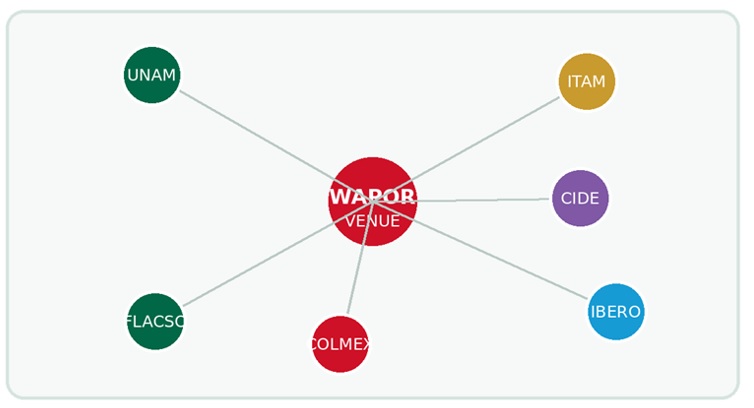
- Strong academic and research institutions: Mexico City hosts an extensive network of academic and research institutions specializing in social sciences, politics, economics, and communication, including UNAM, CIDE, El Colegio de México, ITAM, FLACSO México, and Universidad Iberoamericana. This diversity allows public opinion research to be studied not merely as a process of collecting data, but as part of a broader ecosystem encompassing social sciences, public policy, and political communication.
- Linking academic research with field application: One of the most valuable characteristics of the Mexican experience is the presence of research units that combine theoretical research with applied survey work. A notable example is UDESO, based within the Institute for Social Research at UNAM. It conducts applied social research and opinion studies and combines quantitative and qualitative data-collection techniques with fieldwork, analysis, and database verification. This corresponds directly with the field program’s objective of examining the full public opinion data-production cycle, from research design through data collection, verification, and analysis.
- Diverse research experiences that can be compared with the Arab context: Mexico offers a cultural, linguistic, and political environment that differs considerably from the Arab region, making it a valuable case for comparative research, particularly in relation to democracy, institutional trust, polarization, public participation, migration, media, and public policy. The program therefore provides an opportunity to compare Mexican and Latin American experiences with Arab experiences as distinct cases within the Global South.
- Linguistic and cultural diversity and its relevance to comparative measurement: The Mexican and Latin American context offers a practical opportunity to examine issues related to translating concepts, wording survey questions, and ensuring measurement equivalence across cultures—issues that are fundamental when developing surveys intended for use in multiple societies.
- Interest in contemporary public opinion research methodologies: The importance of the Mexican experience is not limited to traditional survey expertise. The program therefore addresses contemporary developments in data quality, comparative methodologies, digital research, artificial intelligence, and responses to declining survey response rates—issues that have become central to the global development of public opinion research.
- An appropriate environment for studying the relationship between public opinion and politics: The Mexican context serves as a “real-world laboratory” for studying the relationship between public opinion and democracy, elections, institutional trust, polarization, political communication, and changing patterns of public participation. These issues allow the methodological aspects of polling to be connected with the political and social phenomena whose attitudes are being measured.
- Hosting the WAPOR Annual Conference: The hosting of the 79th WAPOR Annual Conference in Mexico City from 26–29 October 2026 adds exceptional value to Mexico’s selection as the destination for this program. The conference provides direct access to an international community of researchers, survey practitioners, methodologists, and data specialists, with approximately 400 participants from more than 55 countries expected to attend.
- Learning from international expertise in one location: Mexico provides access not only to domestic expertise but also, through the WAPOR Conference, to a wide range of international experiences and discussions concerning the latest developments in survey methodology, artificial intelligence and digital research, elections and democracy, trust, media and misinformation, migration and conflict, culture and values, and public policy.
- An opportunity to examine professional and ethical standards in polling: The Mexican experience provides an important case for understanding the relationship between professional practice and institutional regulation. Mexican rules intersect with professional standards developed by organizations such as AMAI, WAPOR, ESOMAR, and AAPOR, making Mexico an appropriate setting for examining standards of quality, transparency, and professional ethics in survey research.
- The possibility of studying the full survey-production cycle: The program makes it possible to examine survey design, sampling, measurement instruments, pretesting, data collection, quality assurance, coding, database management, data analysis, publication, and the transformation of findings into research and policy products. The visit therefore goes beyond theoretical familiarization to examine the practical process of producing public opinion data.
- Opportunities to build research and training partnerships: Mexico’s diverse institutions in political and social sciences, public opinion research, public policy, and media create opportunities to develop professional relationships and future research and training partnerships between Mexican institutions and Arab polling and research centers. Building such networks and developing research cooperation are among the program’s direct objectives.
- Transferability of selected practices to the Arab context: The purpose of selecting Mexico is not to replicate its experience, but rather to identify practices that can be adapted to the needs of Arab public opinion research centers, particularly in data quality, fieldwork management, database administration, methodological transparency, researcher training, and the use of digital technologies and artificial intelligence.
- Integration of the scientific and field dimensions: The program combines participation in a specialized international conference with visits to Mexican universities and research centers, allowing participants to compare the knowledge provided by international networks with local practices inside Mexican institutions themselves. This enhances the program’s scientific value and makes it more closely resemble a field study of the Mexican experience than simply attendance at a conference.
- Efficiency of local transportation and field implementation: A large number of the proposed academic and research institutions are located within Mexico City or its immediate metropolitan area, allowing multiple institutional visits to be organized within a relatively short period without the need for domestic air travel. This increases the number of institutions whose experiences can be explored during the program.
Nature of the Program
The program is based on a field-learning philosophy that combines participation in international scientific events, institutional visits, direct learning from local experiences, and professional networking. Its purpose is not to provide a general tour, but rather a focused intellectual and professional pathway centered on public opinion research, survey methodology, political communication, social sciences, and public policy, while providing an in-depth examination of the Mexican and Latin American experience.
Program Components
- International Conference: Four full days of training workshops, parallel sessions, keynote presentations, and professional activities during WAPOR 2026.
- Field Visits: Three days dedicated to universities and research centers within Mexico City, with an emphasis on public opinion, social sciences, public policy, and digital research.
- Scientific Networking: Opportunities to engage with researchers and practitioners from more than 55 countries, as well as Mexican and Latin American researchers.
- Reflection Sessions: Focused reviews of the main lessons learned and their relevance to the needs of Arab institutions and the development of research and survey programs.
- Knowledge Documentation: Preparation of concluding material summarizing the visits, lessons learned, relevant practices, and opportunities for research cooperation.
- Urban Experience: Taking advantage of the conference’s central location to understand the cultural and social context of Mexico City without distracting from the program through distant domestic travel.
The 79th WAPOR Annual Conference
The conference will take place in Mexico City from 26–29 October 2026 and is expected to bring together approximately 400 participants from more than 55 countries, including academics, research centers, public opinion polling organizations, government bodies, media institutions, civil society organizations, international organizations, and private-sector entities.
The scientific program extends over four days and includes 73 sessions, eight thematic tracks, and six training workshops, in addition to keynote and featured sessions, an awards ceremony, the association’s general meeting, a reception, and closing activities. The tracks focus on survey methodology; artificial intelligence and digital research; elections and campaigns; democracy and trust; media and misinformation; migration and conflict; culture and values; and well-being and public policy.
Conference Theme
Public Opinion Research in an Emerging Multipolar World Order
26–29 October 2026 – Mexico City, Mexico
Program Objectives
- To become familiar with the latest global trends in public opinion research and survey methodology through participation in WAPOR 2026.
- To understand emerging challenges in measuring public attitudes within multipolar political and media environments.
- To examine applications of artificial intelligence and digital research in questionnaire design, translation, data collection, and analysis.
- To visit Mexican universities and research centers and learn from their experiences in social sciences, public policy, political communication, and public opinion research.
- To become familiar with the UDESO model at UNAM for applied social research, public opinion studies, and fieldwork management.
- To compare Mexican and Latin American expertise with Arab regional experiences in methodological, institutional, and professional issues.
- To build a network of relationships with researchers and international institutions that may develop into future research or training partnerships.
- To produce an applied synthesis of practices and ideas that can be adapted for use by Arab research and public opinion polling centers.
Program Duration
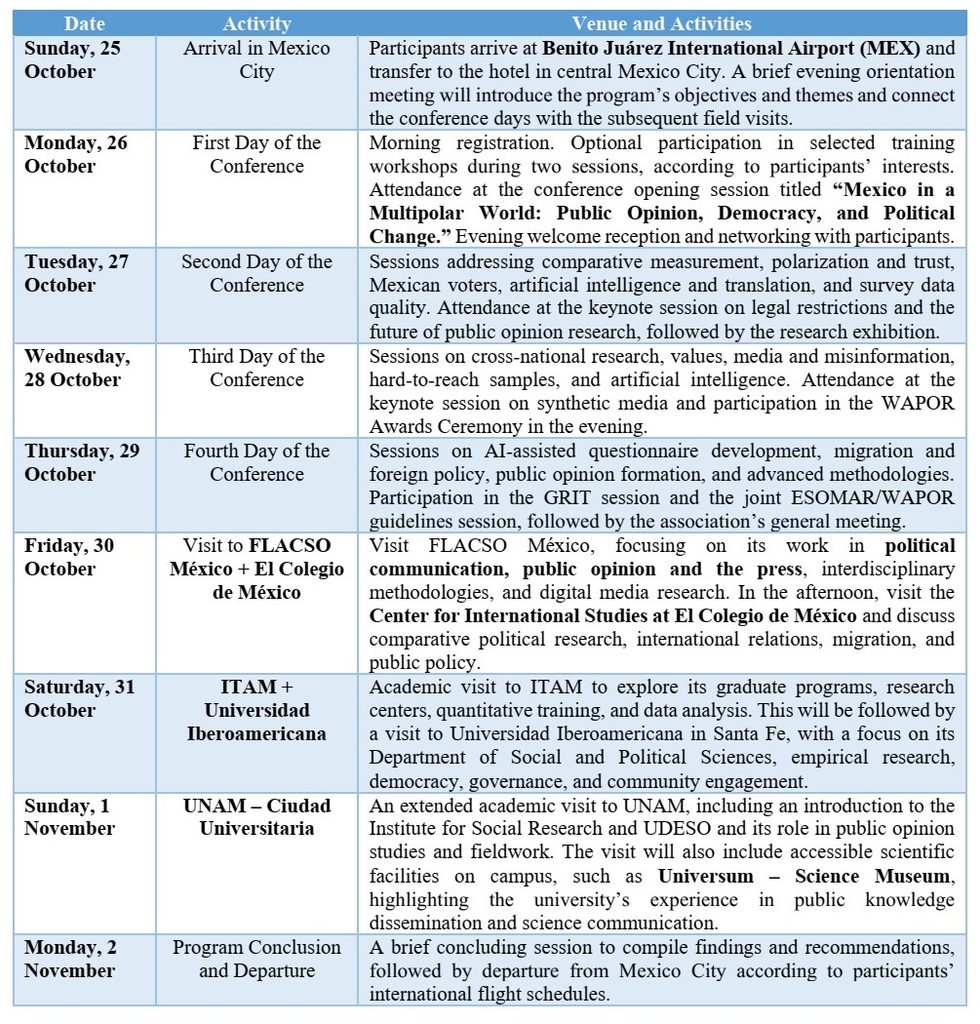
From Sunday, 25 October to Monday, 2 November 2026, including the arrival and departure days. The conference will take place from 26 to 29 October, followed by three days dedicated to university and research visits on 30 and 31 October and 1 November.
Target Participants
- Researchers and specialists in public opinion polling and social and political studies.
- Faculty members and postgraduate students in political science, sociology, media, and public policy.
- Leaders of research centers, polling organizations, and research units within government and private institutions.
- Professionals working in media, strategic communication, and public-attitude analysis.
- Specialists in survey design, sampling methodologies, data quality, and statistical analysis.
- Those interested in applications of artificial intelligence and digital research in the social sciences.
- Professionals working in international organizations, civil society organizations, and institutions that rely on public opinion data for decision-making.
- Academic and research leaders interested in developing partnerships with Mexican and Latin American institutions.
Target Academic and Research Institutions
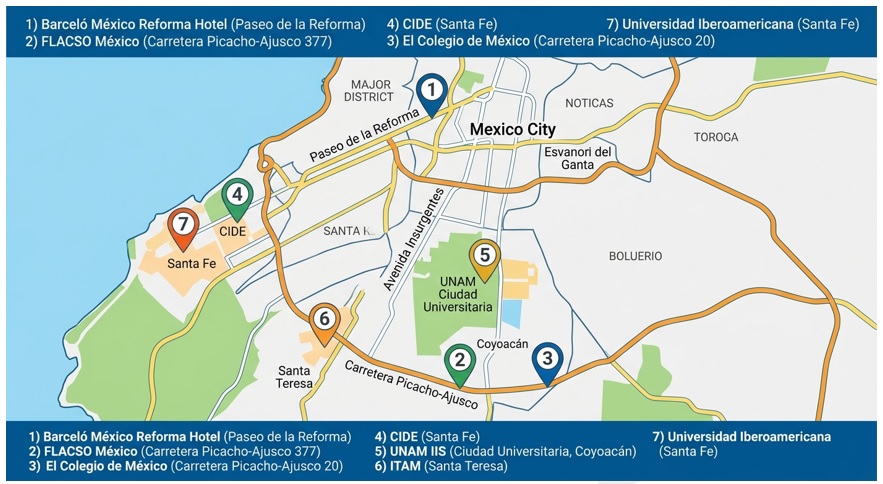
1. FLACSO México – Latin American Faculty of Social Sciences, Mexico Campus
An academic and research institution with a significant regional presence in the social sciences. Of particular relevance is its research line on “Political Communication, Public Opinion and the Press,” which examines institutions, actors, media practices, and social media platforms through an interdisciplinary approach incorporating political science, sociology, anthropology, history, psychology, and policy studies.
2. El Colegio de México – Center for International Studies (CEI)
The Center for International Studies at El Colegio de México provides an appropriate environment for exploring advanced research in political science, international relations, and public policy. It offers academic programs in politics and public administration, international relations, and political science, in addition to research projects, academic forums, and specialized publications.
3. CIDE – Centro de Investigación y Docencia Económicas
A public institution specializing in research and higher education in the social sciences. Its International Studies Division hosts the “Mexico, the Americas and the World” project, a public opinion survey focused on foreign policy, making CIDE one of the institutions most directly connected with the program’s objectives. CIDE also produces applied research in migration, public policy, and political science.
4. UNAM – Institute for Social Research and UDESO
The National Autonomous University of Mexico (UNAM) is one of Mexico’s foremost educational and research institutions. Within its Institute for Social Research, the Applied Social Research and Opinion Studies Unit (UDESO) has operated since 1999 to support applied research and public opinion studies addressing social, economic, and scientific issues.
The Unit specializes in quantitative and qualitative data-collection techniques, analysis and interpretation, and maintains logistical infrastructure for fieldwork, coding, data entry, and database verification.
5. ITAM – Instituto Tecnológico Autónomo de México
ITAM represents a strong university model in economics, politics, data, and public policy. Its Santa Teresa Campus hosts postgraduate programs, diploma programs, and research centers, making it suitable for a visit focusing on researcher training, quantitative analysis, and data applications in public affairs.
6. Universidad Iberoamericana Ciudad de México – Department of Social and Political Sciences
The Department combines political science, sociology, and anthropology, linking research and teaching with social engagement. It emphasizes critical analysis of political and social realities in Mexico and globally, as well as democracy, justice, and cultural pluralism through academic research and community engagement.
Proposed Scientific Agenda for Institutional Visits
The field meetings will focus on a standardized set of themes, enabling practical comparison among the different institutions and facilitating the identification of models that may benefit Arab research and public opinion polling centers.
- Institutional Structure: How are research units organized? How are responsibilities distributed among researchers, project management teams, fieldwork teams, and analysts?
- Survey Design: Sampling mechanisms, development of measurement instruments, translation, pretesting, and methods for addressing declining response rates.
- Data Collection: Balancing face-to-face, telephone, and online interviewing methods and using digital tools to reach diverse population groups.
- Quality Assurance: Data verification, fieldwork monitoring, coding, database management, and methodological documentation.
- Artificial Intelligence: Practical uses of AI in question design, translation, classification, and analysis, as well as limitations, dependency risks, and potential biases.
- Public Opinion and Politics: Measuring trust, polarization, electoral attitudes, foreign policy, and migration in the Mexican context.
- Publication and Impact: Transforming research findings into academic papers, policy reports, and media products serving both the public and decision-makers.
- International Cooperation: Models of research partnerships, researcher exchanges, comparative projects, and potential opportunities for collaboration with Arab institutions.
Program Schedule | 25–29 October 2026
Participants will be provided with the final details of the institutions. Organizations may be added to or removed from the program depending on official approvals.
Program Fees
Full Program Participation — USD 6,800 per participant
The fee includes:
- Registration for the WAPOR Conference.
- Luxury accommodation for 8 nights at a 5-star hotel, including breakfast.
- All local transportation and field visits.
- A comprehensive tourism program and entrance fees to attractions.
- An interpreter for each participant group.
- A copy of the program documentation for each participant, including video and photographs.
- Administrative and secretarial expenses.
- International participation certificates.
Participation in the WAPOR Conference Only — USD 3,900 per participant
The fee includes:
- Registration for the WAPOR Conference.
- Luxury accommodation for 4 nights at a 5-star hotel, including breakfast.
- An interpreter for each participant group.
- A copy of the program documentation for each participant, including video and photographs.
- Administrative and secretarial expenses.
- International participation certificates.
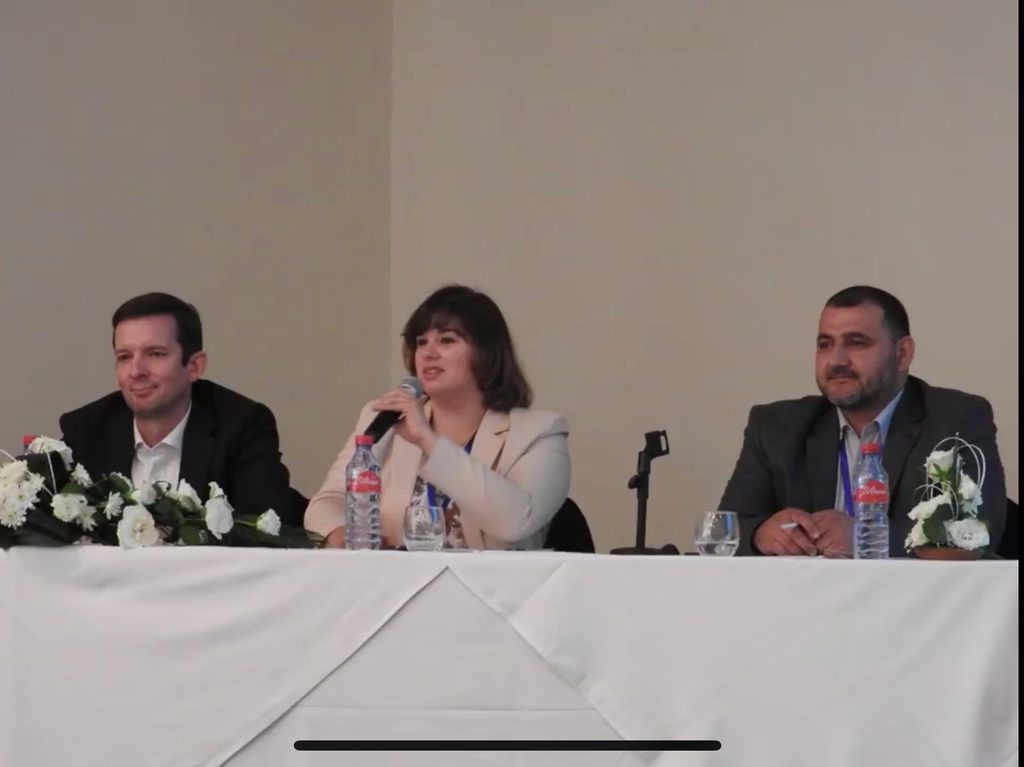
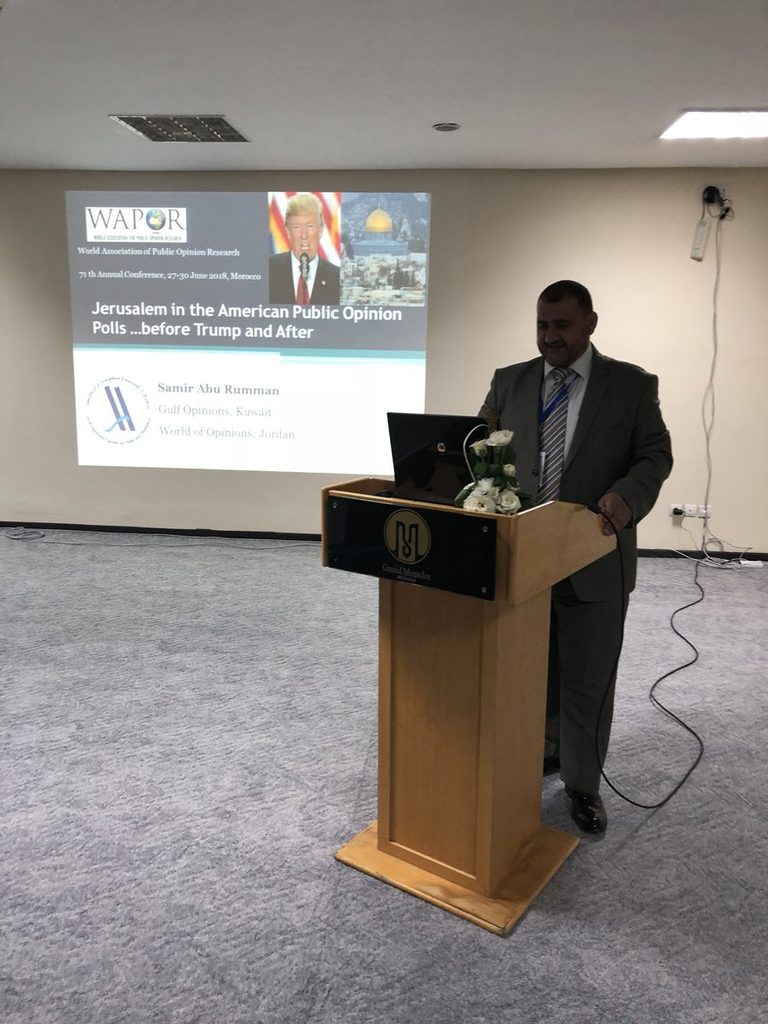
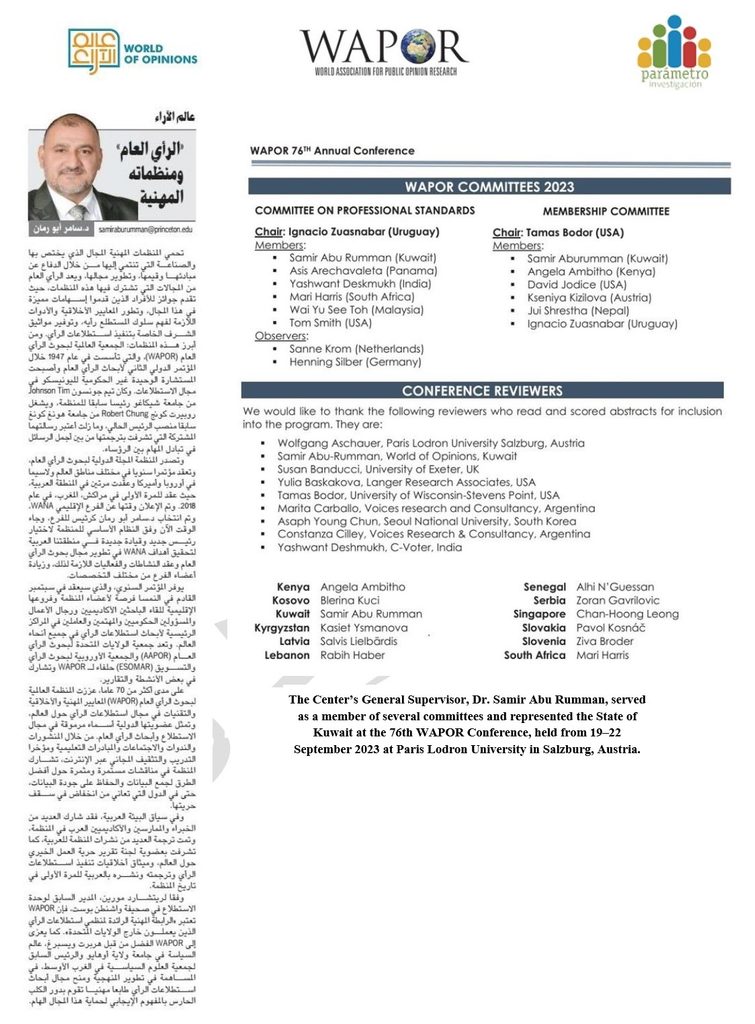
Selected Activities of the Center’s General Supervisor, Dr. Samir Abu Rumman, with WAPOR
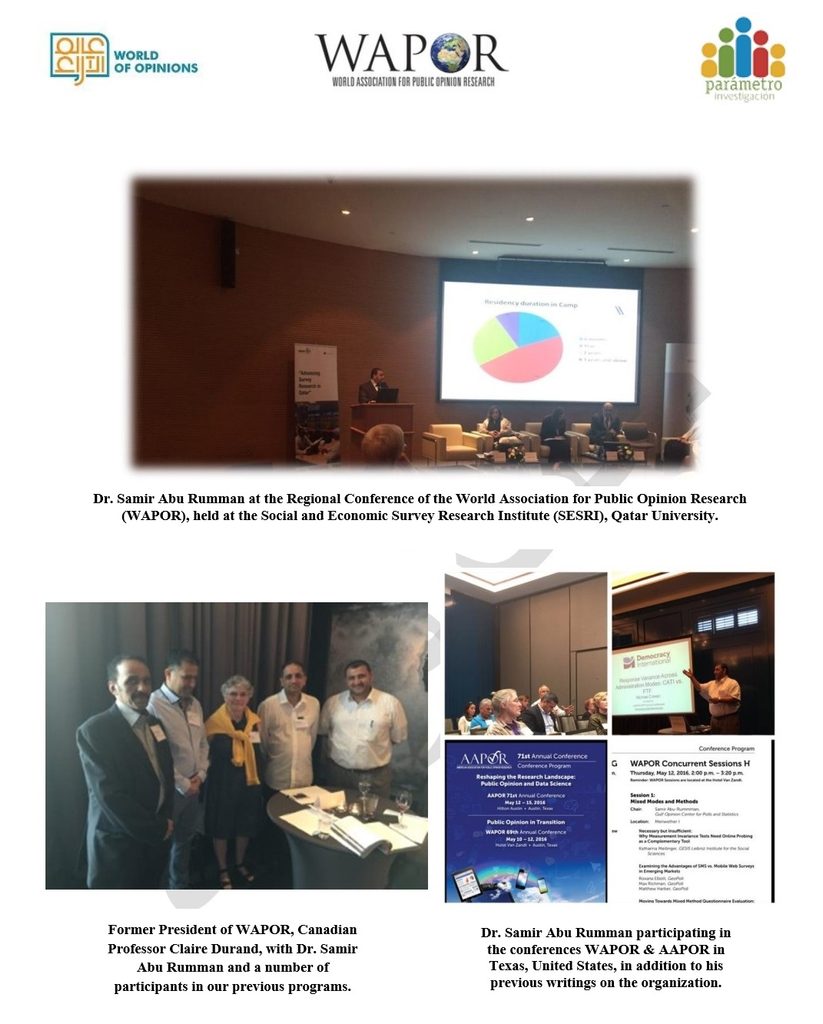
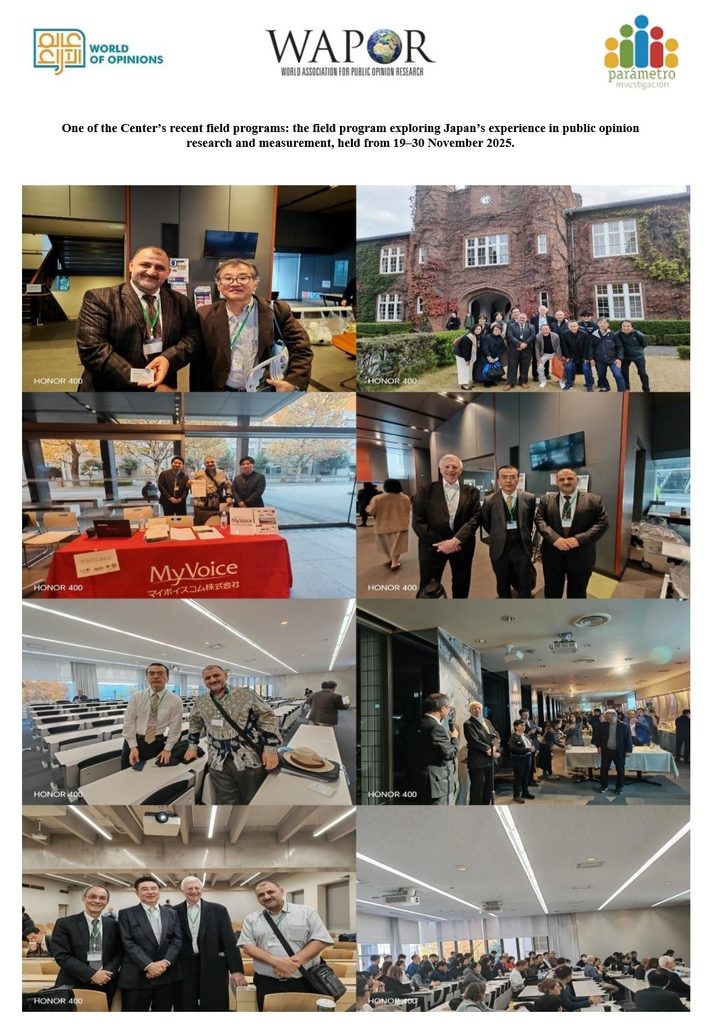
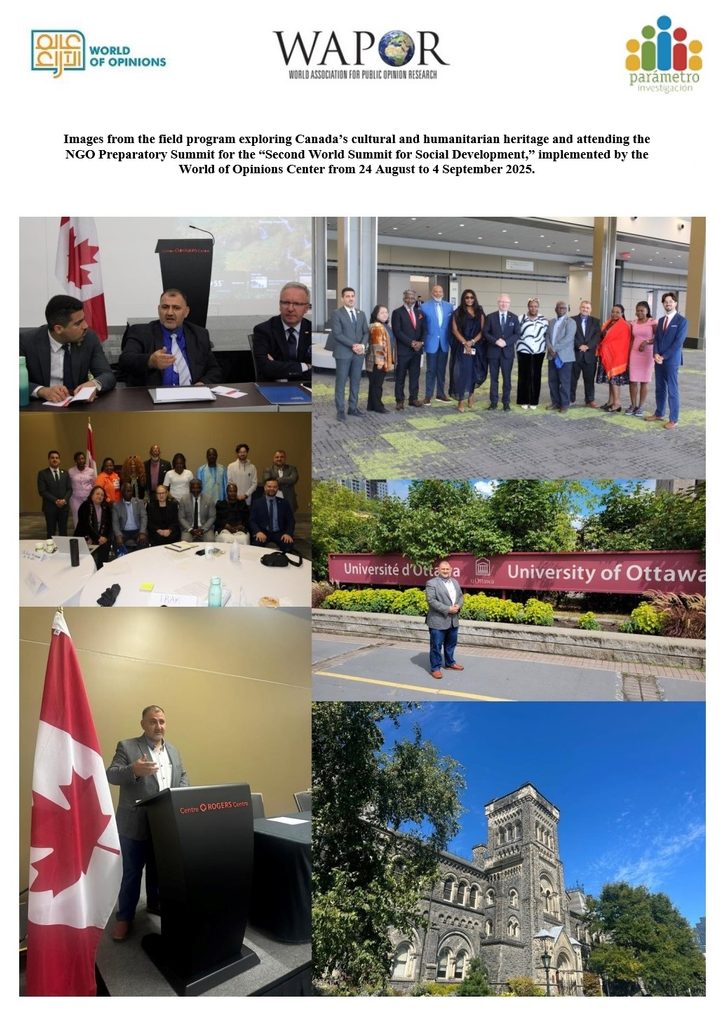
Selected Previous Field Programs of the Center
Program Implementing Organization
World of Opinions for Polls (WoO – Jordan, Kuwait, and the United States) is an independent Arab international center specializing in expertise and consulting. It was established in 2011 in Jordan and the United States, followed by the establishment of its Kuwait office in 2019.
The Center specializes in conducting research studies, collecting data, managing surveys, and carrying out fieldwork operations. It maintains partnerships with a number of institutions and public opinion research centers in the region. Under its own name and through its General Supervisor, Dr. Samir Abu Rumman, the Center has carried out dozens of surveys and research studies with a high degree of professionalism for a wide range of local and international clients, including governmental and private-sector institutions, for-profit and nonprofit organizations, in several countries and on behalf of major international organizations.
Dr. Samir Abu Rumman is a Visiting Professor at George Mason University and a member of both the American Association for Public Opinion Research (AAPOR) and the World Association for Public Opinion Research (WAPOR). He served as a member of the committee responsible for drafting WAPOR’s Code of Ethics and Professional Practices, and previously served as President of the organization’s West Asia and North Africa chapter (WANA WAPOR).
The Center, both institutionally and through its General Supervisor Dr. Samir Abu Rumman, has implemented dozens of field programs in Japan, Canada, the United States, and Jordan. These programs have covered a wide range of subjects, including public opinion studies and measurement, participation in international conferences, philanthropy and social development, cultural heritage, advanced survey methodologies, evidence-based policymaking, studies of the nonprofit and third sectors, youth-sector research and development, municipal affairs and local governance, parliamentary elections, and democratic processes.
Website: https://worldofopinions.org/
Notes
- All participants will be provided with documents confirming their registration in the program to facilitate the process of obtaining a Mexican visa once 30% of the total fees has been received. If a visa is not obtained for any reason, the fees may be refunded.
- The deadline for registration and full payment of fees is 7 October 2026.
- Each participant is responsible for booking their own airline tickets and making their travel arrangements, as well as arriving at the designated times for the beginning and conclusion of the program.
- Places are limited to only 15–20 participants.
Registration and Inquiries
World of Opinions for Polls
Kuwait: +965 9721 5728
Jordan: +962 78269 0631
USA: +1(609) 429-6742
Email:
info@worldofopinions.org
Website:
www.worldofopinions.org
Registration Link:
https://forms.gle/GRHSBg7sXY9vo3Zr9


