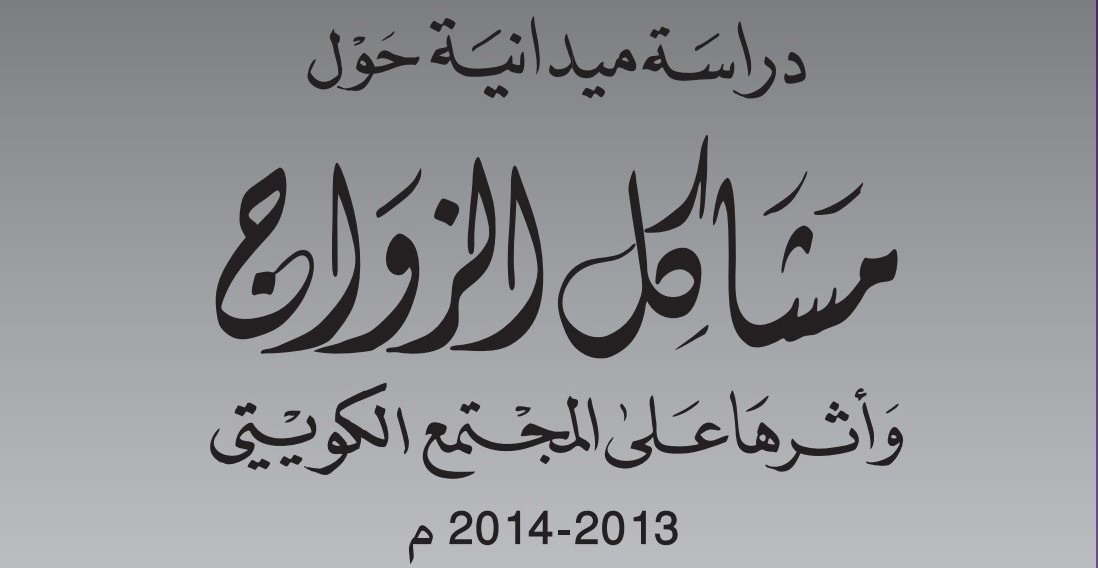
This study was conducted on behalf of the Kuwaiti Ministry of Justice. It aimed to identify marriage problems and their impact on Kuwaiti society, given that marriage is a social necessity for building life, forming families, and organizing the closest relationships among individuals in society. The importance of this study lies in diagnosing marriage problems, classifying their types, and identifying the social, educational, cultural, and economic factors leading to them. It also seeks to develop social and legislative solutions, and to provide appropriate suggestions and contributions to address these issues in a way that mitigates their psychological, social, and behavioral effects on all parties involved.
The study was carried out between 2013 and 2014. In its scientific approach, it relied on several data collection methods, primarily a field questionnaire. This questionnaire was divided into two tools: one dedicated to youth and marriage, and another for married and previously married individuals. Additionally, the study utilized an analysis of official registry data issued by the Public Authority for Civil Information and the Ministry of Justice, alongside surveying the views of family affairs specialists and consultants. The study was executed according to precise scientific and statistical standards that encompassed these multiple approaches.
The study extracted the negative outcomes that cause problems and impact social life. It also examined the factors leading to delayed marriage in order to identify, understand, and address those causes and factors. This study incorporated the opinions of family and marriage specialists and consultants, as well as the views of the relevant ministry departments, including the Department of Family Counseling and the Department of Sharia Legal Documentations, regarding their work closely linked to the study’s topic and its core pillars.
The study comprised two frameworks: first, the theoretical framework, which contains five chapters covering the definition and importance of marriage, the legislation regulating it, the main marriage problems in society, previous literature, and the analysis of marriage registry data. The second framework is the practical one, which consists of four chapters detailing the study’s methodological procedures, its findings, and the identification of direct and indirect marital problems, leading up to the study’s conclusions, recommendations, and suggestions for developing appropriate social and legislative solutions to overcome marriage problems. It also covers the role of civil and official institutions and a survey of competent authorities’ opinions regarding family stability. The study was published in 226 medium-sized pages.
To download Arabic version of the study